 Business License

Intelligent Manufacturing and Digital Transformation
As the global manufacturing industry enters a new round of technological revolution, China's manufacturing sector is accelerating its transition to intelligent manufacturing. Traditional manual operations and experience-based management models are gradually being replaced by advanced digital and intelligent systems. Enterprises are leveraging new technologies to enhance efficiency, quality and competitiveness.
The core driving force of intelligent manufacturing
Intelligent manufacturing is not merely an upgrade of automated equipment, but a comprehensive transformation of the production model. The core driving forces include:
Internet of Things (IoT) technology: By using industrial sensors and connected devices to collect real-time production data, it enables equipment status monitoring and remote management.
Artificial Intelligence (AI) applications: AI algorithms play a crucial role in quality inspection, production optimization, and predictive maintenance, significantly reducing human errors and enhancing production stability.
Cloud computing and big data: By processing production data centrally in the cloud, enterprises can conduct in-depth analysis and predictions, thereby optimizing production plans and supply chain management.
The integration of these technologies enables manufacturing enterprises to not only automate their production processes but also make data-driven intelligent decisions, thereby enhancing the overall operational efficiency.
Industry Application Examples
In fields such as automobiles, electronics, aerospace, and precision machinery, the application of intelligent manufacturing is rapidly being implemented. For example:
Automobile manufacturing: The production line adopts a flexible layout, with robots and AI algorithms working together to complete assembly and quality inspection, significantly shortening the production cycle.
Electronics industry: Utilizing intelligent equipment to monitor every production process, achieving precise assembly and real-time quality tracking.
Aerospace: Utilizing digital twin technology to simulate and optimize complex components, thereby enhancing production accuracy and safety.
These successful cases demonstrate that intelligent manufacturing not only enhances production efficiency but also ensures product quality and boosts a company's competitiveness in the global supply chain.
The benefits brought by digital transformation
Through intelligent manufacturing and digital transformation, enterprises will gain multiple benefits:
Enhancing production efficiency: The synergy of automation and intelligent analysis makes the production plan more refined, reducing downtime and waste.
Optimizing product quality: Real-time monitoring and AI analysis can identify potential defects, thereby enhancing product consistency and reliability.
Enhancing supply chain flexibility: Data-driven decision-making capabilities enable enterprises to respond quickly to market changes and customer demands.
Reduce operating costs: Automation reduces reliance on human labor, optimizes the use of energy and materials, and achieves higher economic benefits.
With the continuous development of 5G, edge computing and industrial internet, the intelligence level of China's manufacturing industry will further increase. In the future, more enterprises will leverage digital transformation to achieve the leap from "manufacturing" to "intelligent manufacturing", and realize high-quality development and enhancement of global competitiveness.
Contact Oliver Brand new products
☛Mobile: | +86 18950128464 (whatsapp) |
☛E-mail: | |
☛Wechat: | +86 18950128464 |
More modules | |||
ABB | 3BHT300054R3/A XI-11 | ABB | 1MRK002239-BB |
ABB | 3BHT300055R0001 CI-10 | ABB | 1MRK002246-BC |
ABB | 3BHT300065R0001 PS-25 | ABB | 1MRK002246-BE |
ABB | 3BHT410082R0001 | ABB | 1MRK002247-AGR05 |
ABB | 3BSE000460R1 PFBO161 | ABB | 1MRK002247-AHR05 |
ABB | 3BSE001245R1 3BSC640008R1 | ABB | 1MRK002247-BHR00 |
ABB | 3BSE003127R1 DSAI 130D | ABB | 1N1346 |
ABB | 3BSE003697R0108 | ABB | 1SAR330020R0000 |
ABB | 3BSE003879R1 | ABB | 1SBP260102R1001 XC08L1 |
ABB | 3BSE011789R1 PXAK402 | ABB | 1TGE102009R4800 |
ABB | 3BSE018137R1 CI858-1 | ABB | 2002NZ10801C |
ABB | 3BSE018293R1 DSAO120A | ABB | 200-CICN 200-CIE |
ABB | 3BSE018295R1 DSDI110AV1 | ABB | 200-IP2 200IP2 |
ABB | 3BSE018298R1 DSDO115A | ABB | 2012AZ10101B |
ABB | 3BSE019216R1 DSBC176 | ABB | 2050RZ23002B |
ABB | 3BSE028588R1 DO880-1 | ABB | 1MRK002239-BB |
ABB | 3BSE050201R1 PM866-2 | ABB | 1MRK002246-BC |
Recently Posted
-
Honeywell 51401583-200: The 200-gram Bridge Keeping the $41 Billion ICS Security Boom Alive
November 1, 20251. Opening Scene – A “Forgotten” Green Card in a $41 billion War“51401583-200” will never trend on Twitter, yet every cyber-secure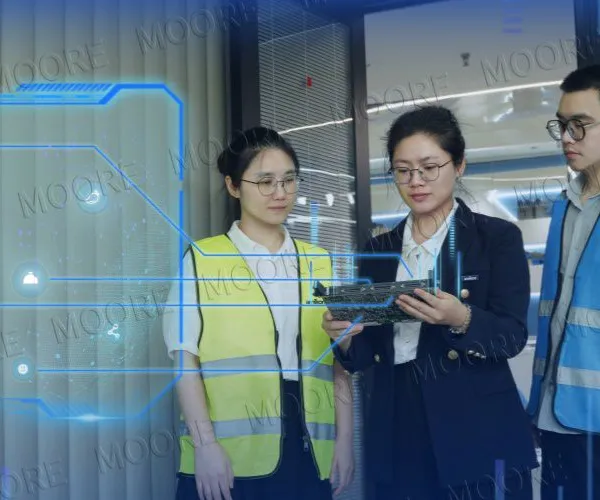 Read More
 -
IIoT Becomes the Default Infrastructure for Modern Industry
October 18, 2025Date: Oct. 18, 2025In 2025, the phrase “we’re evaluating Industrial IoT” has all but disappeared from factory boardrooms. Instead,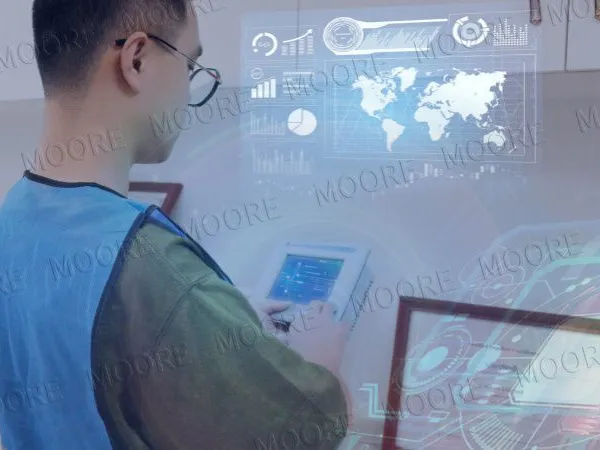 Read More
 -
Industrial Internet of Things (IIoT) and Edge Computing: Driving Digital Transformation
October 14, 2025In today's global manufacturing industry moving towards intelligence, Industrial Internet of Things (IIoT) and edge computing Read More
 -
Renewable Energy and Automation of Electrical Equipment: New Engines Driving Industrial Transform
September 30, 2025With the transformation of the global energy structure, the importance of renewable energy and electrical equipment in the industr Read More