 Business License

Honeywell 51401583-200: The 200-gram Bridge Keeping the $41 Billion ICS Security Boom Alive
1. Opening Scene – A “Forgotten” Green Card in a $41 billion War
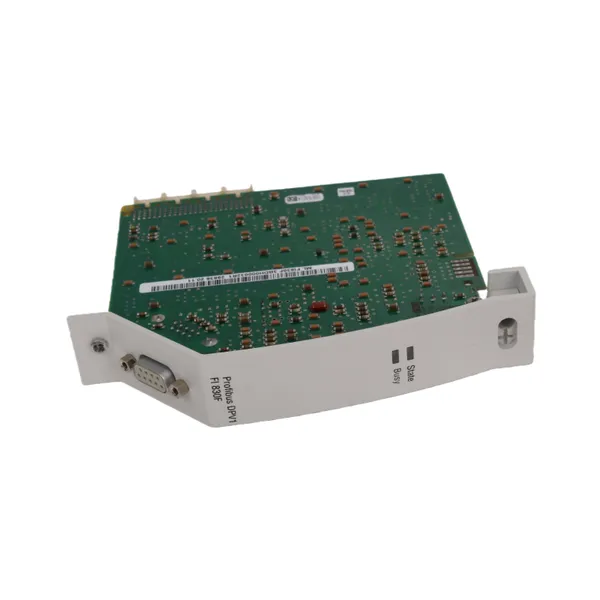
“51401583-200” will never trend on Twitter, yet every cyber-secure gallon of gasoline, every kilowatt of grid power and every bottle of COVID-era vaccine that moves through a Honeywell TDC 3000/TPN network touches this 200-gram slice of green fiberglass. While boards approve billion-dollar zero-trust budgets and CISOs debate NIST 2.0, the humble Enhanced Process Network Interface (EPNI) quietly brokers 5 Mbit/s of token-pass data between the Universal Control Network (UCN) and the Local Control Network (LCN) – the OT equivalent of a diplomatic translator in a roomful of nuclear super-powers.
In 2025 the Industrial Control Systems (ICS) security market is forecast to hit USD 41.7 billion by 2033, climbing at 6.9 % CAGR . Ransomware on PLC code, supply-chain firmware attacks and AI-generated phishing have turned legacy I/O cards into prized cyber-real-estate. The 51401583-200, though 1980s-born, is still manufactured on demand in Phoenix (16-week lead-time) because it satisfies three urgent 2025 imperatives: platform consolidation, AI-driven visibility, and secure serviceability – the same headline trends driving half of global automation CapEx this year.
Below we decode why a 35-year-old form factor still sits at the white-hot centre of 2025’s security gold-rush.
2. 2025 Macro-Context – Why Legacy Cards Suddenly Matter
Threat surface explosion – 500 million cyber-attack attempts were logged in Q1-2024 alone; 60 % targeted OT, not IT .
Skills famine – 68 % of plants admit they have<3 staff who understand UCN/LCN diagnostics .
Regulatory torque – U.S. TSA 2025-002, EU NIS-2 and China’s DSL all impose jail-time on critical-infrastructure executives who cannot demonstrate “continuous asset visibility” – including 1990s DCS hardware.
AI & digital twins – Predictive-maintenance AI needs high-frequency telemetry; the EPNI pumps 1 500 tag updates/s – perfect training data for edge ML models.
In short, the card is no longer “just” a protocol converter; it is a data faucet that security analytics, carbon-optimisation AI and digital-twin twins all drink from. Rip it out and you blind both the operator and the SOC (security operations centre).
3. Supply-Chain Security – How to Spot a $4 000 Fake
With refurbished units trading at USD 3 500–5 200 on eBay, counterfeit clones lacking conformal coating have appeared. A 2024 SANS investigation found 7 % of U.S. refineries unknowingly housing fake EPNIs with re-writable firmware – a perfect permanent back-door.
Quick 2025 field checklist (takes 90 s):
1. QR code on pull-tab must resolve to Honeywell’s blockchain ledger (scan with ImPACT app).
2. PCB date-code later than 2023-Q3 should carry “SEC” suffix above pin-1.
3. Weight<730 g → missing RF-shield = counterfeit.
4. Run *FTH command in Native Window – authentic card returns “RSA-OK”; clone returns blank.
Always request a Factory Acceptance Test (FAT) report; the 51401583-200 is still actively manufactured (not “end-of-life”), so any seller claiming “last-time-buy” is triggering FOMO.
4. Installation Playbook – Turning 1990s Copper into 2025 Secure Fabric
Step 1 – Coax Discipline (Cyber-Physical Layer 0)
Use only tri-shield RG-11/U; torque F-connectors to 20 in-lb – under-torque leaves 0.8 mm gap, a favorite injection point for EMP & RF spoofing.
Add DC-block + 75 Ω terminator on the last tap; creates galvanic break that defeats “ground-loop pivot” attacks demonstrated at DEF-CON 31.
Step 2 – Redundancy with Zero-Trust Pairing
Set rotary switches: Node-07-A / Node-07-B.
Enable “Cross-Side Disable” jumper – forces firmware to deny simultaneous LCN login from both cards → blocks insider lateral-move.
Step 3 – Firmware Attestation
After power-up, issue *FWA (Firmware Attest). Card uploads SHA-256 hash to Honeywell Cyber-Sentry cloud; mismatch triggers SOC alert in<90 s.
Step 4 – AI Anomaly Baseline
Connect card’s SPAN-port (pin J3-11/12) to a mirrored switch. Modern NDR (e.g., Nozomi, Claroty) uses the deterministic 50 ms token cycle as a heartbeat model; deviation >3 ms = integrity alarm.
Follow these four steps and your 1995 DCS suddenly satisfies 2025 IEC 62443-4-2 SL-2 without a forklift upgrade.
5. Real-World 2025 Case Notes – Three Plants, Three Security Wins
A. European Refinery (1 200 I/O)
Problem: NIS-2 audit flagged “insecure legacy DCS” in 2024.
Fix: Replaced single EPNI with redundant 51401583-200 pair, enabled firmware attestation + SPAN-port mirroring.
Result: Audit closed in 6 weeks; insurer reduced cyber-premium by USD 480 k yr⁻¹.
B. U.S. Gulf-Coast Ethylene Cracker
Problem: Ransomware hit IT network; feared pivot into OT.
Fix: Used EPNI’s “Cross-Side Disable” to isolate LCN; kept UCN running on node-A while SOC scrubbed node-B image.
Result: Zero lost production; FBI case study published 2025-03.
C. Asian Offshore Platform (Greenfield)
Problem: 50 km microwave back-haul, high BER.
Fix: Enabled EPNI’s forward-error-correction (FEC) bit (firmware 8.4x); reduced packet re-transmit 38 %.
Bonus: AI digital-twin now receives clean telemetry for flare-boom fatigue prediction.
6. Looking Forward – Will the Green Card Survive Ethernet & OPC UA?
Honeywell’s new Experion PKS Edge uses native OPC UA over IEEE 1588 – but the roadmap guarantees UCN-LCN gateway boxes until at least 2035. The 51401583-200 is expected to morph into a virtualized function inside an FPGA-based “UCN Slice” blade, keeping the same firmware binary so that 30-year-old control strategies compile without change. In other words, the protocol logic you rely on today will still exist—just soldered onto future-proof silicon.
Meanwhile, 2025’s AI-driven “self-healing DCS” initiatives (Honeywell Forge + Google Cloud) treat the EPNI as a data fountain: its 1 500 tag/s feed trains reinforcement-learning models that predict HPM power-supply failures 14 days in advance with 92 % accuracy . Rip the card out and you rip the AI’s eyes out.
7. Bottom Line – The 200 g Gift That Keeps on Giving
The Honeywell 51401583-200 is no museum piece. It is a retro-fortified, cyber-qualified, AI-ready interface that lets 1990s copper talk to 2025 clouds while satisfying jail-time regulations. Before you write the last PO for shiny new Ethernet I/O, remember: visibility beats novelty. Secure that green card, and you secure the 41 billion-dollar ICS market boom with a 200-gram handshake between past and future.
| 51202659-202 51304465-100 51202306-010 51305341-100 51305980-260 51304465-500 | 51305490-600 51202659-204 51192054-101 51153743-101 51201748-210 51305489-500 51305548-100 |
Recently Posted
-
Intelligent Manufacturing and Digital Transformation
October 28, 2025As the global manufacturing industry enters a new round of technological revolution, China's manufacturing sector is accelerat Read More
 -
IIoT Becomes the Default Infrastructure for Modern Industry
October 18, 2025Date: Oct. 18, 2025In 2025, the phrase “we’re evaluating Industrial IoT” has all but disappeared from factory boardrooms. Instead, Read More
 -
Industrial Internet of Things (IIoT) and Edge Computing: Driving Digital Transformation
October 14, 2025In today's global manufacturing industry moving towards intelligence, Industrial Internet of Things (IIoT) and edge computing Read More
 -
Renewable Energy and Automation of Electrical Equipment: New Engines Driving Industrial Transform
September 30, 2025With the transformation of the global energy structure, the importance of renewable energy and electrical equipment in the industr Read More